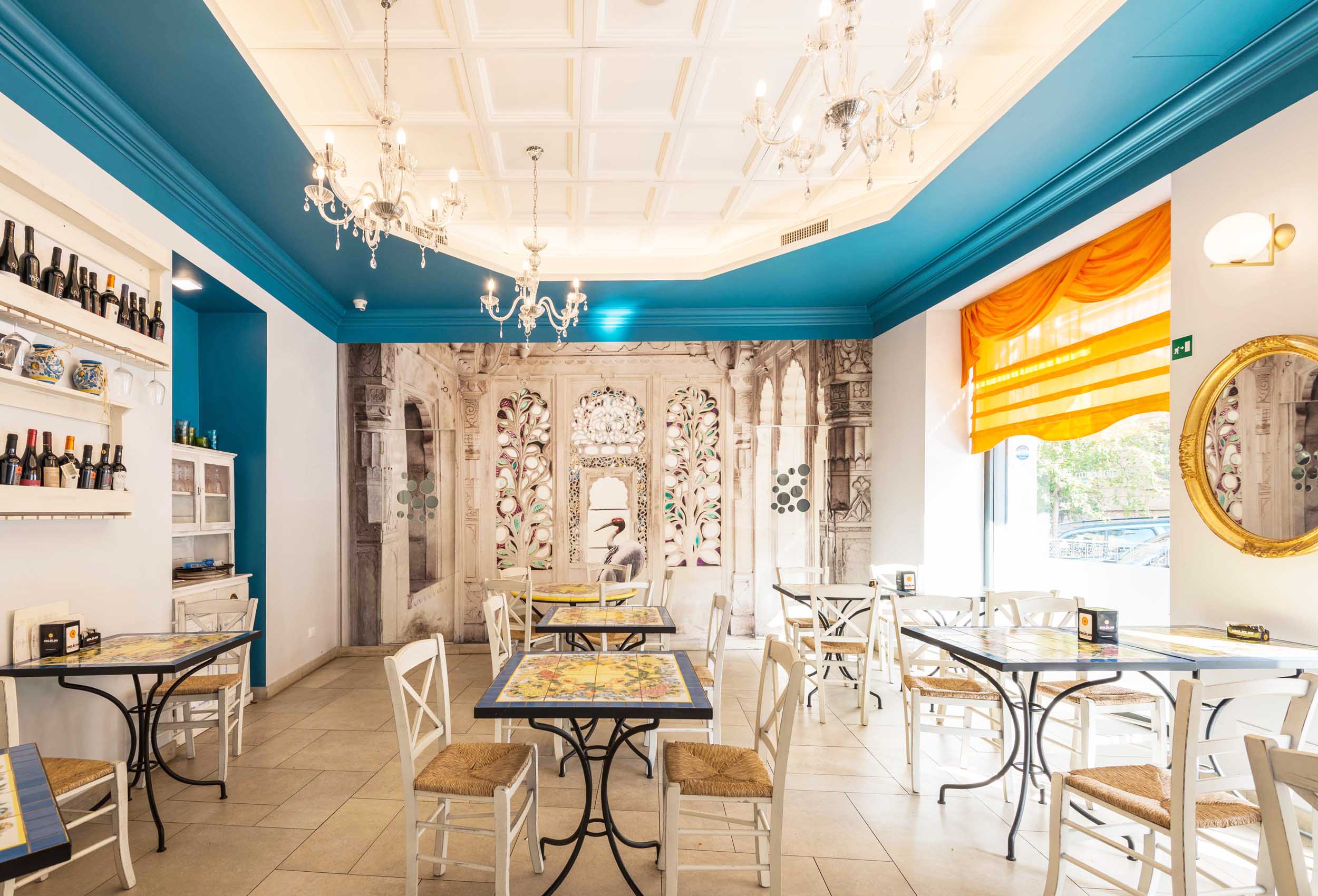
Interior design
Interior design isn’t just about choosing furnishings, colors, or finishes. It’s a complex design discipline, capable of transforming a space into a living, working, or commercial experience that resonates with its inhabitants and its context.
Interior design means creating a precise balance between functionality, aesthetics, the memory of the place, and a contemporary vision. FAD interprets interior design as an integral part of the architectural project: a process that begins with listening to the client and culminates in the creation of custom spaces , meticulously crafted down to the finest technical, material, and emotional detail.


What is interior design and
why it is essential today
Interior design is the planning of interior spaces according to functional, aesthetic, technical, and emotional criteria. It goes beyond simply decorating a space and is not limited to the choice of furnishings. Rather, it affects the quality of space, the layout of rooms, lighting, materials, flow, proportions, and the way people inhabit or use a space.
Today, this discipline is taking on an increasingly central role. Homes are no longer just private spaces, but places where we live, work, welcome, and regenerate. Offices must foster productivity, comfort, and corporate identity. Commercial spaces must communicate a brand, generate experience, and build customer relationships.
A well-developed interior design project improves quality of life, enhances the functionality of spaces, and contributes to the value of a property.Interior design affects the perception of space, emotional well-being, and the ability of a space to meet the real needs of its occupants.
For this reason, talking about interior design today means talking about the vision, method, and culture of the project.

Interior design and architecture: an integrated approach


The FAD method for interior design
The Fucine Architettura Design method begins with listening. Each project takes shape through understanding the client’s needs, lifestyle, habits, desires, and the specific characteristics of the location.
The initial phase is dedicated to analysis: the studio observes the space, assesses its potential and critical points, interprets the architectural context, and identifies the elements to be enhanced. From here, a design research project begins, combining creativity, technical expertise, and a sensitivity to materials.
The project isn’t constructed according to predefined formulas. Each space is conceived as a bespoke solution, capable of combining functionality, aesthetics, and emotion. The distribution of spaces, the choice of materials, the design of custom elements, the relationship between solids and voids, the use of light, and the dialogue between ancient and contemporary become tools for generating identity.
The goal isn’t simply to furnish a space, but to give it character, coherence, and value. Every detail is carefully considered to contribute to the overall experience of the space.

What does an interior design studio do?


An interior design firm deals with the complete planning of interior spaces, addressing both aesthetic and functional and technical aspects.
The main activities include defining the layout of the rooms, studying the flow paths, choosing materials and finishes, designing the lighting, selecting the furnishings, coordinating the colors, defining custom elements, and overseeing the overall coherence of the project.
A structured firm can also coordinate suppliers, artisans, contractors, and workers, ensuring that the initial vision is maintained throughout the execution phase. This is particularly important in high-end projects, where final quality depends on the precision with which each phase is controlled.
It’s helpful to distinguish between several roles. The interior decorator focuses primarily on the selection of furniture, accessories, and decorative solutions. The interior designer works on the composition of the space, its functionality, and the experience of the spaces. The architect, in addition to designing interiors, has broader expertise in structure, regulations, architectural layout, and the technical management of the project.
A studio like FAD integrates these skills, offering a cross-disciplinary vision that encompasses interior architecture, interior design, furnishings, materials, construction details, and implementation.
Residential interior design
In the residential context, interior design has the task of transforming a home into a place profoundly consistent with those who live there. Every home reflects habits, aspirations, daily rhythms, and personal desires. Therefore, the interior design of a residence requires a careful balance between comfort, identity, and functionality.
Fucine Architettura Design develops projects for apartments, villas, private homes, and renovation projects, approaching each space as part of a larger system. The living area, kitchen, bedrooms, bathrooms, utility areas, outdoor areas, and any reception areas must interact with each other through aesthetic and design continuity.
The home is interpreted as an intimate yet representative space. It must be functional for everyday use, yet capable of expressing personality, hospitality, and quality. Materials, lighting, furnishings, and finishes are selected to create measured, never standardized, atmospheres.
When working on home interiors, the goal is to create spaces that don’t simply follow a trend, but that retain their value over time. The project thus becomes a form of care: of the space, of the person, and of the way in which living takes shape.
Interior design for commercial spaces and offices
Interior design applied to shops, showrooms, restaurants, hotels, and offices plays a strategic role. In these contexts, is not just a place to be used, but a communication tool.
A well-designed retail environment helps define brand perception, guides the user experience, and strengthens brand identity. The layout of spaces, the customer journey, the choice of materials, lighting, and furnishings all contribute to building a coherent and recognizable narrative.
In the case of offices, interior design impacts the quality of work, productivity, employee well-being, and the company’s image. Office furniture design shouldn’t be seen as a simple functional feature, but as part of a broader strategy: organizing spaces, encouraging concentration and collaboration, and communicating solidity and corporate culture.
FAD approaches these projects with an integrated vision, combining aesthetics, functionality, and identity. Every choice is carefully considered to create efficient, distinctive spaces that are consistent with the client’s objectives.
Materials, furnishings and custom solutions
The quality of an interior design project is also measured by its materials. Surfaces, textures, colors, finishes, and construction details define the character of the space and influence the perception of the environment.
FAD pays particular attention to the selection of materials, favoring solutions that express authenticity, durability, and coherence with the project. Material research becomes an integral part of the creative process, in a constant dialogue between artisanal techniques and industrial solutions.
Custom interior design allows you to transcend the limitations of standard solutions. Bookcases, paneling, kitchens, wardrobes, wall units, partition systems, tables, counters, and accessories can be specifically designed for a space, meeting specific functional needs and contributing to the overall identity of the space.
Custom design isn’t just an aesthetic choice. It’s a way to make a project unique, optimize space, and create details that belong exclusively to that location and that client.

Interior design between aesthetics, function and emotion
A successful interior isn’t simply beautiful. It’s a space where aesthetics and function support each other, creating a recognizable and coherent experience.
Light, both natural and artificial, guides the perception of volumes. Colors influence the atmosphere and the emotional connection with the environment. Textures introduce depth, tactility, and character. Proportions govern the sense of balance. Furnishings define not only the style, but also the way the space is experienced.
In Fucine Architettura Design’s work, interior home design is interpreted as a sensitive construction of experience. Each space must fulfill a function, but also generate a feeling: welcome, intimacy, energy, representation, calm, or openness.
The emotional dimension isn’t separate from technique. On the contrary, it arises precisely from the precision of the design. An environment is emotional when every choice feels natural, when nothing is random, and when the space expresses an authentic relationship between person, place, and material.
Contemporary interior design and a dialogue between ancient and modern
Interior design often means engaging with historic buildings, pre-existing architecture, original materials, and cultural stratifications. This requires a specific sensitivity: contemporary design should not erase the character of the place, but interpret it.
FAD works on the fusion of ancient and contemporary elements, seeking a balance between memory and innovation. Original floors, walls, ceilings, openings, historical proportions, or pre-existing details can become an active part of the new project, interacting with contemporary materials, custom furnishings, and technological solutions.
This approach avoids both the musealization of the space and its trivialization. The ancient is treated not as a purely conservative constraint, but as a design resource. At the same time, the contemporary is introduced not as an extraneous gesture, but as a language capable of enhancing the space’s identity.
It is in this dialogue that interior design, architecture, and local culture find a refined synthesis.

The design process: from vision to realization
An interior design project requires method, control, and continuity. The quality of the final result depends on the ability to manage all phases, from the initial idea to the on-site implementation.
The process begins with an analysis of the space and the client’s needs. This is followed by the definition of the design concept, which establishes the project’s identity, atmosphere, material references, and aesthetic direction.
This is followed by the preliminary design, the layout definition, and the development of the final and executive design. During this phase, materials, finishes, furnishings, lighting, construction details, and technical solutions are specified.
The implementation phase requires coordination. The firm can monitor the dialogue with suppliers, artisans, and contractors, ensuring that the project is executed consistently with the initial vision. This monitoring is essential to maintaining quality, timelines, precision, and reliability.
From vision to implementation, the project thus becomes a structured process, in which creativity and technical rigor proceed hand in hand.
Choosing Fucine Architettura Design means relying on a firm capable of overseeing interior design projects with a comprehensive vision, from the creative phase to the final realization.
The studio’s value lies in the integration of architecture and design, in the ability to listen to the client and translate their needs into customized solutions, in the attention to detail and in the search for a balance between aesthetics, function, and emotion.
Each project is approached as a unique case. Customization doesn’t just involve style, but the entire process: spatial layout, materials, furnishings, lighting, connection to the context, and execution quality. This approach allows us to create residential, commercial, and professional spaces that stand out without resorting to predictable solutions.
For clients seeking comprehensive, professional, and high-quality service, Fucinead is a single point of contact, capable of transforming the initial vision into a concrete, coherent, and long-lasting space.
Every interior design project begins with a vision, but takes shape through method, expertise, and attention to detail.
To transform a home, office, or commercial space into a custom-designed space that reflects your identity and its context, contact Fucine Architettura Design and request a consultation for your interior design project.